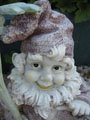
Neighbours talking over the garden gate has long been a tradition. They share gardening tips, complain about the weather and pests yet are ever eager to discuss their gardens. That is what I had in mind when creating this blog. So stop by my garden gate to find out the latest happenings in my garden.

Happy Gardening!

Garden Gnome
"All my life through, the new sights of Nature made me rejoice like a child." ~ Madame Marie Curie"

Thursday, May 24, 2007

Slugging the Slugs!

Pokey asked about slug problems in strawberries. I thought the topic should be discussed in greater detail. As many of you know, I garden as organically as possible with dish soap and vinegar being about as toxic as I will use. I also grow most of my vegetables in raised beds or containers. This makes slug control considerably easier. Most slug control involves killing them off. As always my caveat is to identify the pest first before taking any action. The easiest way to detect slug activity is of course seeing them in action. If you haven't actually seen them, then place a brick or folded sheets of wet newspaper near the damaged plant in the evening. The next morning check for slugs. If there are slugs, manually remove them and depending on the extent of the problem take stronger measures.

Slugs must be able to get into the raised bed or container. A simple way to prevent this is to place copper tape or wire or tubing around the perimeter of the raised bed or container. It can be a decorative element just make sure it goes around the entire perimeter. Fasten it down securely. The slug slime interacts with the copper essentially electrocuting the slug. If your plants are in traditional beds, place the copper wire or even copper pennies around the base of the plant to protect them.

Beer has long been a remedy for slugs but use cheap, fresh beer instead of stale beer. This method will confirm the damage is actually being done by slugs as well. At dusk, pour about 2" of beer into a sour cream or margarine container. I like the smaller cream cheese containers for this purpose. Bury the container to the rim near the damaged plants. The next morning remove the drunken slugs and dump the debris nearby. This will attract natural slug predators effectively giving two lines of defence against the slimy little critters.

Caffeine is an effective slug control. Pour left-over coffee into a spray bottle then spray directly onto slugs in the evening. Place used coffee grinds around the slug damaged plants. If you are dealing with a situation like a strawberry patch such as mine that is not planted in rows, sprinkle used coffee grinds in and around the plants. Vinegar sprayed on slugs will act much the same way however it is an herbicide so don't spray it on plants or where the over spray will get onto plants.

Iron phosphate sold under brand names like Sluggo work to eradicate slugs without poisons. However, I do not recommend them. My first experience with iron phosphate was when I was just starting a vegetable garden in another house. At that time we had ponds and welcomed toad and frogs as well. We had a lovely fat toad who mysteriously disappeared after using this product. For the rest of that season we had no toads and we fished several birds out of the ponds. So I will not use this product despite the labelling that says it is safe. Now this is just based on my experience but there is evidence that slug pellets are reducing the natural slug predators.

Diatomaceous earth is the mined fossilized remains of dinosaur-era, sea-going creatures called diatoms. On a microscopic level it is incredibly sharp causing cuts on the slugs as they travel over it. The cuts cause the slugs to dehydrate on contact. It is best used around plants that are being damaged by slugs and refreshen after a rain or watering. Diatomaceous earth is a fine powder so a dust mask should be used during application. This is not a solution I would recommend to anyone with respiratory problems since you will be working in and around the plants while the diatomaceous earth is present.

Attracting natural predators for slugs is one of the easiest ways to control them. Natural predators include: frogs, song thrushes, mistle thrushes, redwing blackbirds, ground beetles, Bacillius Thurungiensis, centipedes, fire flies and many birds. Duck and chickens like slugs as well and if you've read this blog you will see I have welcomed my guinea hen visitor because of the insect control. When encouraging natural predators do not use pesticides!

As pests go, slugs are fairly easy to identify either from their dried slime trails or direct spotting. So get out there and slug those slugs!

Happy Gardening!

Garden Gnome
©2007


Tuesday, May 15, 2007

Strawberries


Strawberry Blooms
May 15, 2007

My experience with strawberries is they are very hardy. My June bearing strawberries are now in bloom so it won't be long. The majority of them are housed in a 8' x 10' raised bed. The bed originally was planted with strawberry plants I moved from our old house, planted in a temporary bed then moved to the new raised bed the following year. I do not know what variety they are but talk about tenacity! These plants do not understand the concept of temporary garden beds, raised beds or garden pathways. They have sprouted up in the temporary bed and spread even though I thought I had them all dug and keep pulling them. They have filled the raised bed and spilled over the sides of the raised bed rooting themselves on the paths. I have given away strawberry plants for the past three years and yet I am over run with them! They are like weeds! Needless to say, I am starting several pots to go along with us if we end up moving.

This is a wonderful variety with large, juicy berries. I really don't do much with them other than watering and a heavy application of organic fertilizer after they finished bearing. Once in awhile I toss in a little epsom salt. From there the strawberries live on neglect. I suspect the rabbits or gnomes are giving them more attention than I am!

Happy Gardening!

Garden Gnome
©2007


Thursday, May 10, 2007

Attacting Birds to Your Garden


Ruby Throated Hummingbird
May 10, 2007


Look at my new garden visitor! Isn't he just adorable? This picture was a real fluke as the feeder is hanging on the back porch so I can see any activity from the kitchen window. Well there he was flitting around so I had to grab the camera and take several shots. I should have taken a video clip as well but I was so excited, I didn't think about it. Hummingbirds are attracted to trumpet shaped flowers like trumpet vine and petunias. Not only will they feed on the nectar they will eat insects so these are birds you want in the garden.

I've talked before about attracting beneficial wildlife into the garden while discouraging damaging wildlife. Most birds are beneficial in the garden but even beneficial birds like robins can present a problem if you do not provide them with the essentials. Birds need: shelter, food and water. Provide all three so you do not inadvertently create a problem. Water is very important so provide a couple of sources including a shallow, on the ground water source for bats, another beneficial garden visitor. Control the birds you are trying to attract by what you plant and what you offer for food. If grackles or cowbirds are a problem and they can be, change your feed to something without corn. Safflower seed will attract the cardinals but grackles and cowbirds do not care for it so they will move on. If rodents are a problem, put up more feeders but away from your house. More feeders attract more birds which in turn will attract the predators like the Sharp Shinned hawk. They will keep your rodent population in check naturally. Finches like Niger seed and don't overlook a suet block for the nuthachers. Be sure to pay attention to where the birds like to feed. Some birds prefer feeding at ground level so account for that but quite often there is enough overflow from the feeders to attract ground feeders. Shelter can be provided in the form of birdhouses or natural. If depending on natural shelter place your feeders near the shelter. This gives the birds a place to hide if a predator appears and it gives them a place to nest.

Happy Gardening!

Garden Gnome
©2007


Monday, May 07, 2007

Goldfinches


Goldfinches
May 3, 2007

Gardening is more than just growing things. For years I have tried to attract beneficial wildlife especially birds and butterflies. This is always a pleasant time of the year when the goldfinches return. They like niger seed as does the house finches. Their bright yellow colour is sure to bring a smile as they flit around the garden!

Yesterday I did a little garden shopping. I picked up some panseys, ornamental millet, coleus, French thyme, parsley, Supersonic tomatoes and grass seed. A lot of my gardening plans are on hold or altered with the pending sale of our house but I'm still getting the beds ready and have started planting. I'll be doing more container gardening as well as leaving newer purchases in containers. The ornamental millet is now framing the front door so I'll leave that in containers. Today I spotted the first Baltimore Oriole! The greenhouse is now up and running. Tomorrow I will start diving some of the herbs. They need it anyway and this way I will have some of the perennial herbs potted ready for moving if all goes well.

Happy Gardening!

Garden Gnome
©2007


Friday, May 04, 2007

Rhubarb


Rhubarb
May 2, 2007

It has been a great pleasure to see the newly planted last year rhubarb come up. My husband is so excited and is patiently awaiting the first rhubarb pie. I will can up some as well for use as a sauce in the winter. My pie and canning recipes are on my cooking blog, Mom's Cafe Home Cooking if you are interested. The rhubarb should be ready for first cutting later this weekend.

Rhubarb is an undemanding, easy to care for plant. Most will tell you it is difficult to kill but I can attest to the fact that sometimes it does not like to be moved. I think just about house has a rhubarb patch in this area so it is not often seen in the stores. The stems are edible but the leaves are toxic so keep those away from children and pets. Our kids like to eat the rhubarb as is straight from the garden even when they were little so I had to teach them not to eat the leaves. This is one plant that loves being cut. It will reward you the following year with a larger patch! The plant will benefit from a little epsom salt spred around the base.

I prefer to cut the stems when they are about the diameter of my thumb. That way they are nice and tender. Cut about a half inch above the soil line. Remove leaves then wash and process. Leave the smaller stems to largen then cut as needed repeating the process. With very little effort your rhubard patch will reward you for many years to come.


Happy Gardening!

Garden Gnome
©2007


Thursday, April 26, 2007

Tulip Tips


Tulips
April 2007

Tulips are one of the easiest to grow and almost problem free flowers for the garden. They are a true spring delight sure to bring a smile. Some of our tulips are finally in bloom and the rest are ready to follow suit. Each year the tulip clumps get larger. The majority of the tulip clumps are orangish red giving a blast of wonderful colour. Somehow a clump of rosy pink and one clump of deep yellow found their way into the bed. The tulips were inherited with the house.

Tulips need very little maintenance. If planting new bulbs, they should be planted in the fall but can be planted in the early spring if the bulbs have be pre-chilled in the refrigerator for six to eight weeks prior to planting. I prefer the naturalized look so clumps instead of rows is the way to plant for this type of tulip garden. Take a handful of bulbs, drop onto the soil from a height of about two feet. Plant each bulb where it lands. Spacing should be about 4 inches apart but in a random pattern. If planting new bulbs for a more formal look, plant in rows with a 4 inch spacing. Planting depth for either should be 2 1/2 to 3 times the diameter of the bulb or about 4 to 6 inches deep.

Tip #1: After tulips are finished blooming, leave them alone until they die back. The leaves are providing food to the bulb. Leaves and stems should be left until the turn brown and fall off by themselves or come off with a very tender tug. Your tulips will thank you with gorgeous blooms the following year.

Tip #2: In milder climates, tulips should be dug up and pre-chilled in the fall before planting. This is not necessary for our Zone 6A in Ontario, Canada but I know some do it anyway. I don't. My tulips seem to live on neglect.

Tip #3: Dividing tulip clumps is rather easy as I found out accidentally while digging in the garden bed where they were growing. Up popped several tulip bulbs some with smaller bulbs attached. I worked up the soil, broke the bulbs apart then replanted the bulbs. This approach worked well for me but if you are in a warmer climate you should pre-chill the bulbs before planting again.

Tip #4: Take pictures! You might not think your tulips have changed from one year to the next but they do.

Happy Gardening!

Garden Gnome
©2007


Wednesday, April 25, 2007

One Year Anniversary


My Gnomes

One year ago today I started Garden Gnomes Wanderings blog. Over the year there have been a few changes mainly with the template. I'm still having a lot of fun writing this blog so expect it to last. Today our house is one step closer to being sold. If that happens I'll go through the steps of turning over the garden to the new owners and the steps of creating a new garden. Time will tell. At this time my garden is proceeding as normal.

Here's a picture of my gnomes including my two newest gnomes holding lanterns, yet unnamed. They are slightly larger than Gnameless but I don't think he minds. He's the only gnome outside at the moment as the newer gnomes don't have their sunblock on yet. My gnome community has been joined by a lone fairy and turtle with her turtlelet. They too remain nameless.

Happy Gardening!

Garden Gnome
©2007


Monday, April 23, 2007

Bluejays


Attracting birds to my gardens has been one of my goals. Most birds are beneficial in the garden and while some can be pests, they are easily controlled. I was shocked when a fellow gardener referred to grackles as junk birds! As gardeners, we are stewarts of the land so there should be no such thing as junk critters. Some are pests and some are beneficial but all serve a purpose.

I took this video of the bluejays a couple of mornings ago. Their antics are quite entertaining! Every morning I toss out peanuts for them. If I don't have them out before they arrive, one of the bluejays will sit on the windowsill and peck at the window pane until I toss out the peanuts. These are two younger bluejays that I suspect are offpsring from Mr. Fat. I haven't seen Mr. Fat for awhile but he did the same thing the first little guy is doing. He'd pick up a peanut then drop it and repeat the process. We finally figured he was searching for the heaviest peanut!

Happy Gardening!

Garden Gnome
©2007


Sunday, April 22, 2007

Earth Day 2007


Happy Gardening!

Garden Gnome
©2007


Friday, April 20, 2007

Yesderday In The Garden

The weather has finally turned mild compared to the nasty April start. I spent a bit of time in the garden yesterday just puttering and enjoying the new growth. Now this is rather bitter sweet in some ways as we do have the house listed for sale and our offer was accepted on another house. Basically the only thing we have to do to move is sell our house. Looking at all I've accomplished in the garden is heartwarming and it will be sad to leave it behind yet there is a bit of anticipation and excitement at the possibility of starting a new vegetable garden. If all goes well, it will be the fifth vegetable garden I've started and watched mature.

Rhubarb

Our family loves rhubarb! My kids will pull of a stem and eat it as is right in the garden while eyeing up what else they can pick and pop into their mouths. Believe me when I know they are going to be home, I have to get up early to get anything from the garden! Rhubarb pie is another family favourite. Whatever we can't use fresh is canned or froze.

I was pleased to see the cold spell did not affect the rhubarb. This is a fairly new patch with this being the second season but it does appear to be doing well. It is on the north side of the greenhouse.

Small Raised Beds

I spent a little time working up the three smaller raised beds. The soil was not worked to a fine texture just merely. The reason for this is the square foot method. I'll sprinkle on a layer of fresh soil and sifted compost. Each square is reworked as it is planted so leaving the beds this way is fine. The grids were formed using push pins and cotton yarn as described in a previous entry.

As you can see the paths need a bit of work. A solution of vinegar and water will take care of any weeds or grass peeking through. We need to rake the paths as well just to clean up any winter debris.

On a sad note, someone has taken it upon themselves to kill two of the three guinea hens that have been visiting my garden. I learned last week that one had been captured and killed. Yesterday I discovered the carcass of another floating at the water's edge. Some cowardly person callously killed this beneficial bird then tossed it into the water. I blogged about this on my personal blog today. It saddens me to see this type of destruction!

Happy Gardening!

Garden Gnome
©2007


Tuesday, April 17, 2007

Please Watch Your Step


It's springtime and time to do a little updating on the blog. Over the next few days you will see a lot of changes and at times the blog may look just a tad weird as I tweak the elements and template. Sorry for any inconveince.

Happy Gardening!

Garden Gnome
©2007


Sunday, April 15, 2007

More Signs of Spring

Naked Lady Lilies
Amaryllis belladonna

Despite the recent cold weather, signs of spring are all around us. Yesterday a house finch and goldfinch were visiting my neighbour's niger seed feeder. The bluejays are coming around for their daily peanut offering. If I don't have the peanuts out by the time they arrive, one of the bluejays has taken to sitting on the windowsill then tapping on the window. The first one to arrive, goes around picking up each peanut then dropping it. He finally decides on a peanut, lets out a call then flies off with his treasure. It's rather humous to watch. We think he is looking for the heaviest peanuts. The guinea hens are still visiting daily. My neighbour says they will be nesting soon.

Yesterday I noticed the Naked Lady Lilies (Amaryllis belladonna) were poking through the leaves. I made an entry on these interesting lilies back in August 2006. They get their name from their unique growing pattern. From now until late spring, the clumps of leaves will grow then they die back. After the leaves die back in mid-summer, up pop the naked stems with pretty trumpet shaped, fragrant pale pink lilies on them. The patch under the Rose of Sharon has spred as has the transplanted patch.

Happy Gardening!

Garden Gnome
©2007


Sunday, April 08, 2007


Enjoy!

Garden Gnome
©2007

Free clipart, animations and web graphics


Sunday, April 01, 2007

Standing Guard


Standing Guard
Garden 2006

Garden gnomes bring good luck to your garden and work hard to help your garden prosper but sometimes they need a bit help. That is where other garden decorations can help. Garden decorations add a touch of whimsy to the garden but they can also help in pest control. Pests are smart especially the rabbits who likely have group meeting to decide the best way into my garden and how they are going to outsmart me next! The best decorations for this purpose is anything with large eyes or items that resemble eyes because the represent predators. It's best if the eyes have a bit of shine to them especially at night. Other useful garden decorations that can help with pest control are those that move such as streamers or whirligigs and decorations that make noise. For best pest control results be sure to move the decoration to a different location and use more than one type. Motion activated decorations that make noise are more effective than those that make noise all the time.

Quite often farmers will use owl statues and they are popular for keeping swallows away from the boats in marinas or on docks. There are motion activated owls that likely would be more effective. We have two plastic owls, one for our boat well and the other for the garden. In the garden, the owl seems to be effective for discouraging squirrels, rabbits, mice as well as morning doves. The first three pests are destructive while the morning doves, a relative of pigeons, makes a mess. For best effect, I move the owl around the garden on occasion so pests do not become adapted to it's location. That's important since once the pest becomes adapted to your strategy, the decoration will no longer be effective.

Happy Gardening!

Garden Gnome
©2007


Friday, March 30, 2007

More Signs of Spring


Buds on Maple Tree
March 26, 2007


Mike Thomas, a reformed anti-blogger who's blog is call Brannigans Law commented on my cooking blog about a video his wife had made about gnomes. I just had to check out her video called "I Think I'm a Gnome Now". This is a must see for all gardeners unless of course you don't like gnomes. I have three of gnomes in the video: Jack, Jeff and Phillip. Thanks Mike for giving me a great chuckle this morning! Here's to all gnome lovers everywhere!

Signs of spring are everywhere! I can't believe how quickly buds appeared on the trees. Although the weather has cooled a little, it does look like March just may go out like a lamb. A short 30 days ago I posted how it came in like a lion here. Tomorrow will tell!

I spent a bit of time emptying pots in the greenhouse. We are putting in an offer on another house tonight something that may create a few challenges for this growing season but nothing we haven't gone through before. The landscaping is mature so that's a real plus. So I'm definitely in the spring cleaning mode both inside and out. The garden paths need a good vacuuming but the beds themselves look fine. They just need the soil worked up and grid laid out. Garden plans are on schedule despite the uncertainty.

Happy Gardening!

Garden Gnome
©2007


Wednesday, March 28, 2007

Signs of Spring

There have been a few signs of spring here. The temperatures reached 77ºF here on Monday and that's after our first thunderstorm of the season. Yesterday I spotted our first robin, the bluejays were back to pecking at the window and the weather was very mild. So I did a little garden work, took the solar lights out to charge in the greenhouse and take a few pictures.

Chives

I have two outdoor chive patches. Now anyone who has grown chives know they are practically indestructible. The main patch is in bed #2 that is dedicated to herbs.

The second patch was started last year in a barrel I intend to gnomify. We freeze in the winter so I did not expect these chives to survive. Yet they did and are now poking their heads through. I think Philip the fluting gnome will look good here and it not I'm sure another know will find a home in this barrel.

Tulips

I don't know the varieties of tulips as they were here before we bought the house. I initially did a complete dig not realizing there were tulips there. They must have liked that because they have multiplied and rewarded me with abundant blooms. This is one of many along our south wall and as you can see will be in bloom shortly. I can't wait! There is something about tulips blowing in the wind that just means winter is well behind us.

Tulips have a special meaning for me. When I was little you wore either a white tulip or red tulip on Mother's Day depending on whether your mom was living. Well my biological mom died a few days after I was born but I had the mom who raised me so I got to wear both! My tulips are scarlet, yellow and sort of a mix so I hope neither mom cares about the colour and know that I think about both of them often. A vase of tulips always graces our table on Mother's Day.

Happy Gardening!

Garden Gnome
©2007


Thursday, March 22, 2007


Phillip & Jeff

Please welcome Phillip and Jeff, my newest gnomes checking out one of the seed trays. They arrived by gnometravel this morning. While Gnameless is still looking for help in the garden, these two don't really looking like they have their mind on garden work. But that's ok because I'm sure Gnameless already knows that a gnome village requires input from all the little folk. Gnomes always work together and that's the way it should be.


Happy Gardening!

Garden Gnome
©2007


Saturday, March 17, 2007


Ten Ways to Go Green in the Garden

  1. compost
  2. use mulch
  3. use only organic fertilizers
  4. manually remove pests
  5. collect rainwater for garden watering needs
  6. use solar powered lighting instead of electric
  7. attract beneficial insects
  8. use natural pesticides
  9. use companion planting
  10. use organic soil ammendments
Happy Gardening!

Garden Gnome
©2007


Friday, March 16, 2007

Skywatching


Sunrise
Lexington Harbour, Michigan

A very condensed version of this entry was first posted on my personal blog, My Journey this morning. Once I started writing it, I thought if expanded it would make a good entry here. The entry on that blog starts with a little animation I was playing with this morning but I thought for this entry, I would start out with a sunrise picture since skywatching is the theme. While the connection with gardening is not at first apparent, hopefully by the time I'm finished, you will see the connection.

Mornings are one of my favourite times of the day. I love watching the sunrise to great the day and hear the birds twittering as the world seems to come alive. During the growing season it is the best time to be out in the garden. It is nice and cool, quiet yet buzzing with activity. Many detrimental insects like the Japanese Beetle are sluggish making manual removal easy. However, it is also one of the best predictors of what the day will be like weatherwise. And that is what this entry is all about, watching the skies and becoming in tune to what they are saying.

Long before television, radio and weatherman, our ancestors relied on the skies for when to plant, what to plant, and for the weather. In 1792 farmer's almanacs became popular as weather predictors based on astronomy and they offered valuable farming tips, something most people could use. In 1793 Robert B Thomas published the first issue of The Farmer's Almanac renamed to The Old Farmer's Almanac in 1831 but changed back in 1835 to the original name. When Robert B Thomas died in 1847 his successor, John H. Jenks returned the "Old" and it has remained that way since. This almanac is by far the popular almanac today. I buy a copy each year.

Approaching Storm

We boated to Lexington Harbour and stayed overnight fully intending to spend the following day there and possibly another night. I arose early to watch the skies. Red sky in the morning, sailors take warning does ring true as any boater will tell you. Some of the most gorgeous sunrises give way to the nastiest weather throughout the day. So it was this day and the storm was chasing us as we left the harbour headed across the Lake Huron. My suspicions were confirmed by the marine radio and within about 20 minutes we could see the storm coming. The dark clouds here were minor to how bad it got but we had to stop to put the top up so I couldn't get any more pictures.

There are other ways to tell of changing weather besides a red sky. Some are obvious but others subtle so if you catch the subtle hints first, you can have your garden battened down before nasty weather hits. Observe the moon on a clear night. A hazy ring around the moon means precipitation will be coming. A cloudy night means you are out of luck so look for other signs. A sudden still where it seems nothing is moving is the calm before the storm. Maple leaves especially silver maple turn upside down before a storm. I don't know why they do this but they do and I know it is a sure sign of a storm. Birds quite often act differently and where there were a lot of birds twittering away, suddenly it becomes quiet without nary a bird in sight. Even the squirrels seem to disappear. There is little doubt what it means when the sky turns a sickly green. These are all signs of precipitation or nasty weather on the way.

Sometimes the daybreak reveals a haze. It is pretty to photograph but it means the weather will be hot and dry or hot and humid depending on where you live. Over the period of a few days the haze may deepen each morning to the point it is noticeable during the daylight hours. As the humidity builds one or more signs of stormy weather will appear.

So, how does this pertain to gardening? As gardeners, we are stewards of the earth. It provides for us and in return we try improve but do no harm. Watering can cost a lot of money in some areas, is restricted in others and for those on wells conservation is always a concern. By watching the skies and learning the signs, you will save on watering. If the sky is clear, check the moon for a haze around out. If there is, don't water the next day. If signs are pointing towards rain, even if it comes later in the day, do not water unless your plants are under obvious stress (droopy, wilted). If the signs are pointed towards moderate (pinkish sunrise with blue sky) then water normally. If the signs are for hot, humid weather building towards thunderstorms water normally, increasing if needed but only until the first signs of weather changing.

Happy Gardening!

Garden Gnome
©2007


Thursday, March 15, 2007

Please Wecome Jack My New Gnome


Gnameless Gnome & Jack

Gnameless gnome was used to being the only gnome in my garden. As you can see he lost a couple of pieces off his rake so I'll have to see if I can find a way to fix that for him. He was joined by a wide variety of other garden decorations. This year I decided to use a unifying theme instead of a mish mash of decorations. Of course that theme had to be gnomes! The visiting kids should really like these little guys! I also decided to add solar lighting and while I now have eight solar lights and two solar rock lights (spotlights made to look like rocks) I am planning on adding just enough to get a subtle twinkle effect.

Jack the swinging woodland gnome arrived today. His birthplace was Aarons Enterprises Inc. then he traveled to Krupps and finally came to me. He is an 8" gnome so a bit smaller than Gnameless. I was quite happy with him so ordered two more gnomes. I'm planning on making or buying gnome ladders for each of the beds so the gnomes can get up there and will be adding a few other gnome accessories. The goal is to achieve a gnomescape without interfering with the function of the gardens.

Gnomes and other garden critters should be protected by an acrylic spray with UV protector annually in it something I did not know. So I will be cleaning Gnomeless and the raccoon twins then spraying all of them before placing in the garden this year.

Happy Gardening!

Garden Gnome
©2007